



Huntington’s disease (HD) is a rare, inherited neurological condition that gradually damages certain nerve cells in the brain. Over time, it affects movement, thinking ability, emotions and behaviour. Although it is uncommon, its impact on individuals and families can be profound because the condition is progressive, lifelong and currently has no cure.
According to the NHS, Huntington’s disease develops because of a fault in a single gene and is passed down through families. The Huntington’s Disease Association highlights that HD affects not only the individual diagnosed but also their relatives, carers and future generations. Meanwhile, research from institutions such as the UK Dementia Research Institute continues to improve our understanding of how the disease develops and how it might eventually be treated.
This article explains what Huntington’s disease is, how it develops, its symptoms, how it is diagnosed and treated, and what support is available for families and carers in the UK — including those living in Haringey.
What Causes Huntington’s Disease?
Huntington’s disease is caused by a mutation in the HTT gene, also known as the huntingtin gene. This gene contains the instructions for producing a protein called huntingtin, which plays an important role in the healthy functioning of brain cells.
In people with Huntington’s disease, the gene contains an abnormal repetition of a DNA sequence known as a CAG repeat. This expanded sequence causes the huntingtin protein to become faulty and toxic to nerve cells. Over time, the abnormal protein gradually damages neurons in parts of the brain that control movement, behaviour and thinking.
Because brain cells cannot regenerate once lost, this damage leads to the gradual progression of symptoms.
Huntington’s disease follows an autosomal dominant inheritance pattern, meaning:
-
A person only needs to inherit one faulty copy of the gene to develop the disease.
-
If a parent has Huntington’s disease, each child has a 50% chance of inheriting the condition.
-
If a person does not inherit the faulty gene, they cannot pass the condition on to their children.
This predictable genetic pattern is one of the defining features of Huntington’s disease.
When Do Symptoms Begin?
Symptoms most commonly appear between the ages of 30 and 50, although they can begin earlier or later. In rare cases, symptoms may appear during childhood or adolescence. This form is known as juvenile Huntington’s disease and can progress differently from adult-onset HD.
One of the difficulties with Huntington’s disease is that early symptoms often develop gradually. At first, they may be mistaken for stress, depression or mild coordination problems. Because the symptoms can vary widely between individuals, recognising the condition early can sometimes be challenging.
How Huntington’s Disease Affects the Body and Mind
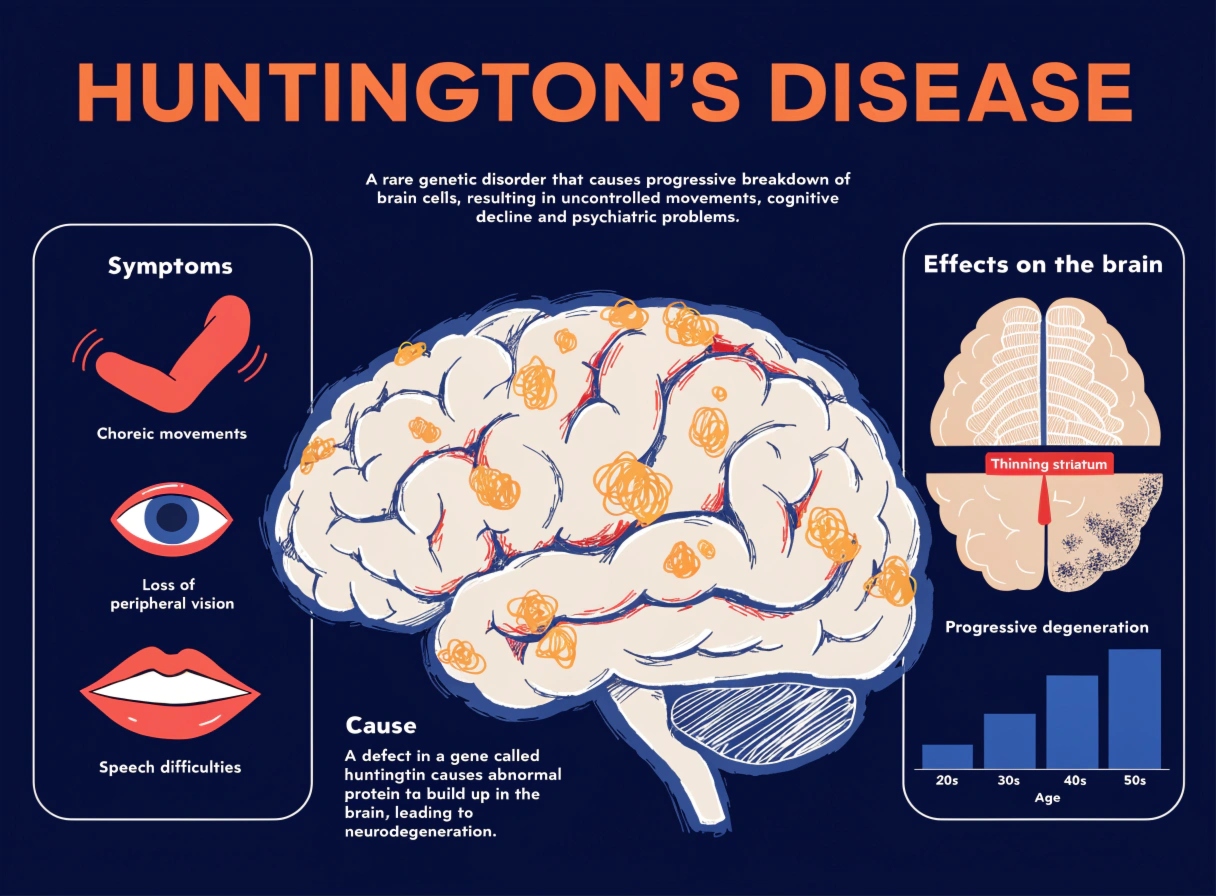
Huntington’s disease typically affects three main areas: movement, cognition and mental health. Most people experience a combination of symptoms affecting all three.
Movement Symptoms
One of the most recognisable symptoms of Huntington’s disease is chorea, which refers to involuntary, jerky and unpredictable movements. These movements can affect the face, limbs and body.
As the condition progresses, people may experience:
-
Clumsiness and poor coordination
-
Difficulty walking or maintaining balance
-
Problems with speech
-
Difficulty swallowing
-
Muscle stiffness or rigidity, particularly in later stages
Over time, these movement changes can make everyday activities increasingly difficult and may reduce independence.
Cognitive Changes
Huntington’s disease affects parts of the brain involved in executive functioning, which includes planning, organising and decision-making.
Common cognitive symptoms include:
-
Difficulty concentrating
-
Slower thinking or processing of information
-
Problems planning tasks or organising activities
-
Reduced ability to adapt to new situations
-
Memory difficulties
Unlike some other neurological conditions, early memory loss is not always the first symptom. Instead, many people first notice changes in thinking speed and organisational skills.
Psychological and Behavioural Changes
Mental health symptoms are extremely common in Huntington’s disease and can sometimes appear before movement symptoms.
These may include:
-
Depression
-
Anxiety
-
Irritability
-
Impulsive behaviour
-
Mood swings
-
Apathy or lack of motivation
Because these symptoms can affect relationships and daily functioning, psychological support is an important part of treatment and care.
How Is Huntington’s Disease Diagnosed?
Diagnosing Huntington’s disease usually involves several stages.
First, a GP will assess symptoms and review the patient’s medical and family history. If Huntington’s disease is suspected, the person may be referred to a neurologist for specialist assessment.
A genetic blood test can confirm whether the faulty HTT gene is present.
For people with a family history of HD but no symptoms, predictive genetic testing may be available through specialist genetics services. Because the emotional and practical consequences of testing can be significant, counselling is provided before and after the test.
In the UK, predictive genetic testing is typically offered only to adults aged 18 or older.
Is There a Cure for Huntington’s Disease?
Currently, there is no cure for Huntington’s disease and no treatment that can stop or reverse the underlying brain damage.
However, many treatments can help manage symptoms and improve quality of life. Care is usually provided by a multidisciplinary team, which may include:
-
Neurologists
-
Psychiatrists
-
Physiotherapists
-
Speech and language therapists
-
Occupational therapists
-
Dietitians
-
Social workers
Medications may be used to manage movement problems, depression, anxiety, sleep difficulties and other symptoms. Supportive therapies can also help people maintain independence and communication for as long as possible.
How Does Huntington’s Disease Progress?
Huntington’s disease is a progressive condition, meaning symptoms gradually worsen over time.
The speed of progression varies between individuals, but many people live 15 to 20 years after symptoms first appear, sometimes longer.
In the later stages of the disease, people may require full-time care. Swallowing difficulties can increase the risk of complications such as infections, including pneumonia.
Although the condition becomes more severe over time, supportive care can help maintain comfort, dignity and quality of life.
Research and Future Treatments
Although there is currently no cure, research into Huntington’s disease is ongoing around the world.
Scientists, including researchers from the UK Dementia Research Institute, are studying:
-
How brain changes begin before symptoms appear
-
Methods for reducing the production of the faulty huntingtin protein
-
Gene-targeting therapies
-
Biological processes that influence disease progression
Understanding the genetic and molecular mechanisms behind Huntington’s disease is essential for developing future treatments that could potentially slow or prevent the condition.
While promising therapies are being studied, no gene therapy or disease-modifying treatment is yet approved for routine clinical use in the UK.
Living With Huntington’s Disease
Huntington’s disease can affect many areas of everyday life, including:
-
Employment and career planning
-
Driving ability
-
Relationships and family life
-
Financial planning
-
Long-term care needs
Access to the right support services is essential for maintaining quality of life. The Huntington’s Disease Association provides information, specialist advisers and support for families across England and Wales.
Meanwhile, the NHS offers medical care through neurology, genetics and mental health services.
Support for Carers
Caring for someone with Huntington’s disease can be emotionally and physically demanding. As symptoms progress, many people with HD need increasing levels of support with daily activities.
Carers often help with:
-
Medication management
-
Personal care
-
Mobility assistance
-
Emotional support
-
Communication with healthcare professionals
Behavioural changes associated with Huntington’s disease can also be difficult for families to manage. Because of this, carers may experience significant stress or emotional strain.
In the UK, carers are recognised as having their own support needs. The NHS and local councils offer services designed to support carers and protect their wellbeing.
Huntington’s Disease Support in Haringey

People living in Haringey can access medical care and social support through NHS services, local council programmes and community care providers.
Your first point of contact is usually your GP, who can assess symptoms and refer patients to neurology specialists or genetics clinics if Huntington’s disease is suspected. The NHS provides access to specialist care through neurology, mental health and genetics services.
Residents may also be eligible for support through Haringey Adult Social Care, which can assess care needs and help coordinate support at home for both individuals with Huntington’s disease and their carers. Local authorities can provide services aimed at helping people remain independent and safe in their homes for as long as possible.
Support in the borough may include:
-
Adult social care assessments
-
Community care services
-
Occupational therapy support
-
Carer assessments for family members
-
Signposting to local charities and support organisations
Alongside council and NHS services, families may also explore support from local home care providers.
My Homecare Haringey is a domiciliary care provider offering personalised support to people who need help living independently at home. Services may include personal care, meal preparation, medication assistance, domestic help and live-in care depending on individual needs.
Home care services like these can sometimes help people with long-term neurological conditions remain in familiar surroundings while receiving assistance with everyday activities. This type of home-based support (often called domiciliary care) is designed to help older or disabled people manage daily tasks and maintain independence within their own homes.
For many families affected by Huntington’s disease, accessing these services early can help reduce stress, support carers and maintain independence for as long as possible.
National Support for Families and Carers
The Huntington’s Disease Association is the main organisation supporting people affected by Huntington’s disease in England and Wales.
The charity provides:
-
Specialist Huntington’s disease advisers
-
Information for patients and carers
-
Support groups and community networks
-
Guidance on benefits, care planning and future decisions
Connecting with organisations like this can provide practical help and emotional support for families navigating the condition.